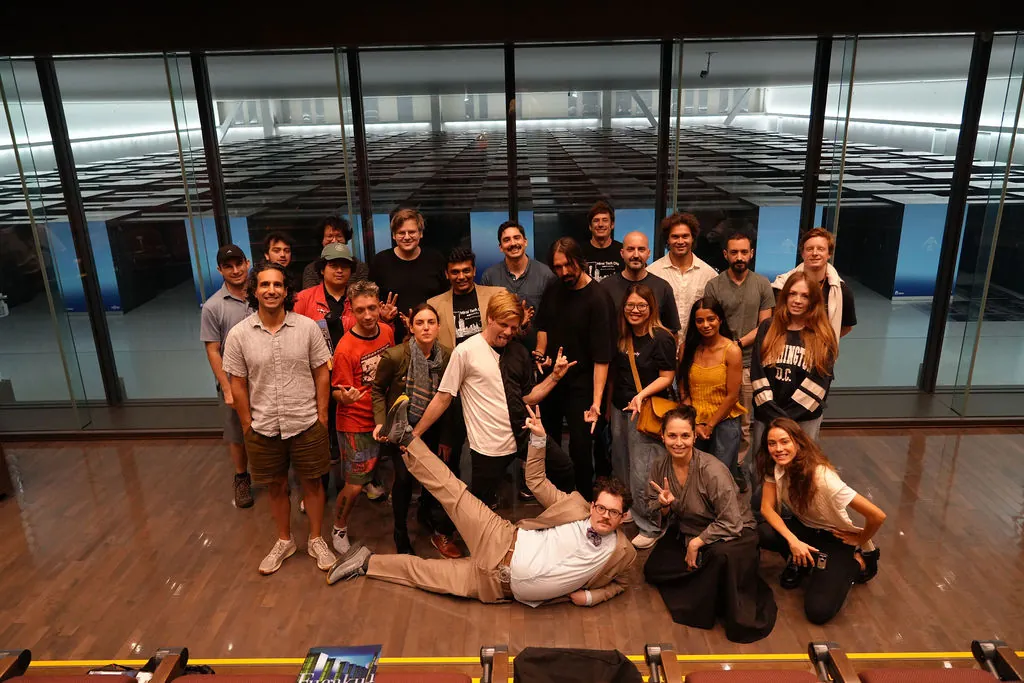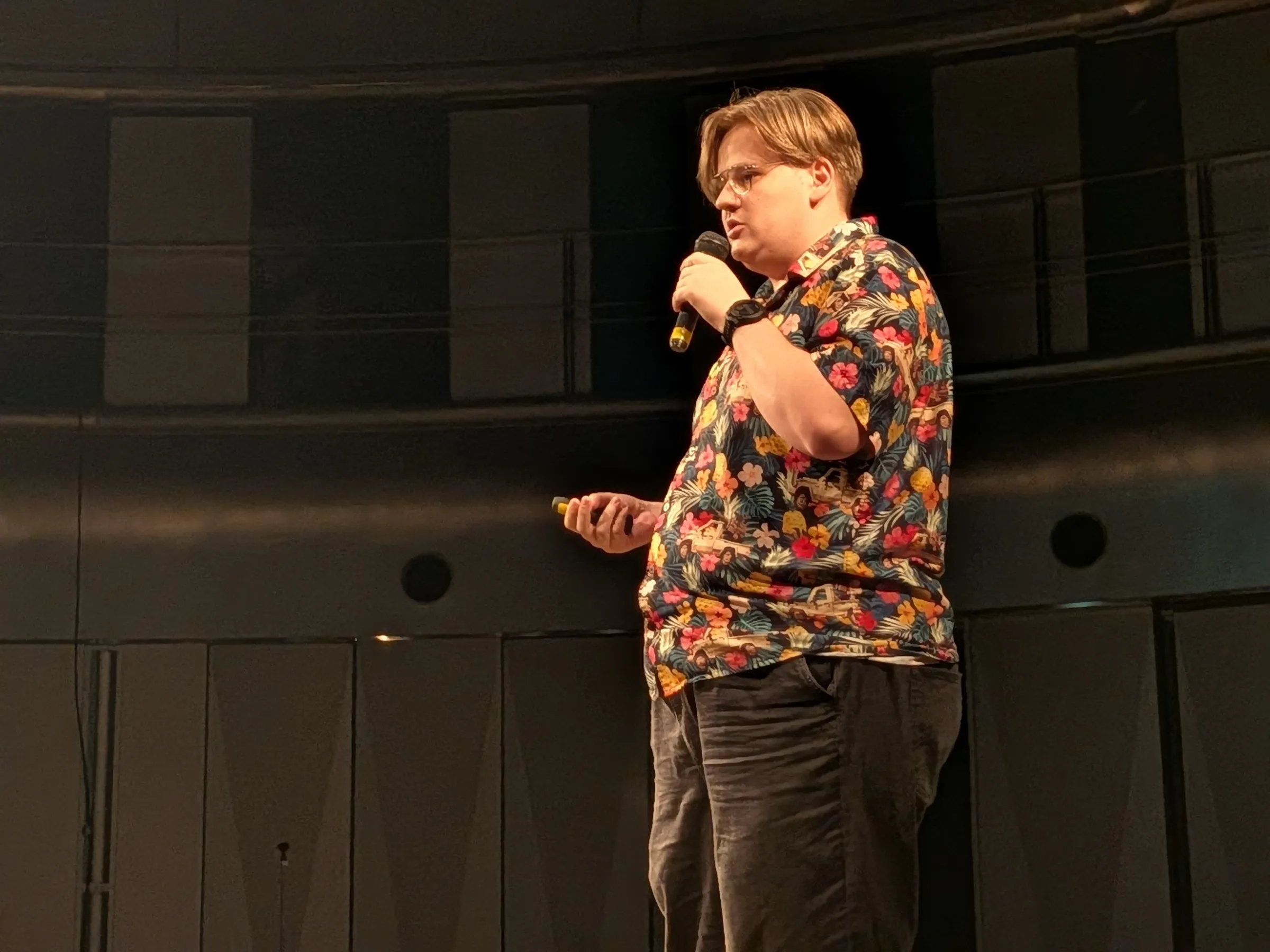
When Max Koko pitched at our Demo Day in Kobe on 26 October, he was one of about 20 longevity, biotech and medtech founders from around the world in front of a six-person jury: Keita Masui (ASAGI Labs Ventures), Karen Onuma-Mielke (GlobalDeal), Florian Geier (Antler Japan), Paul Yang and Sophia Z. Boettcher Kimura (Governance Partners), and Taiga Tamiya (Miyako Capital). He won, and his prize was a place in Antler Japan's residency, which selects fewer than 5% of its applicants.
His company, Probabilistic Biology, wants to make animal experiments work more like cloud computing: a datacenter of cages fitted with non-invasive sensors, starting with mice, where every animal yields far more data and experiments can be run from a laptop. We asked him why he thinks the mouse experiment needs rebuilding.
Tell us your story. What were you doing before Probabilistic Biology, and what was the moment you decided the mouse experiment had to be rebuilt from scratch?
I spent many years as a technologist in the City of London, but I've long been passionate about biology. Around 2016–17, while I was running a local hackerspace, we built one of the first DIY biolabs in Poland. A few years ago I finally made the move: I left London for Cambridge and took a job at the Sanger Institute.
Then I started a human biobank company. We used GDPR and HIPAA access requests to help people reclaim their own medical and genomic data. But it showed me how slow biology's data pipeline is. Getting data took months, enforcing the law took longer, and the people who owned the data were miles away from the companies that wanted it, with nothing lining up their incentives.
Fixing human clinical data comes with execution risk and market risk: even if you build it well, the market may not be ready to work that way. Experimental data has only execution risk. The demand is already there, and the question is whether we can build it. So that's where I decided to go.
Give us the vision in one breath: a world where biologists run animal experiments from their laptop. What does a biologist's Tuesday look like in that world?
It looks like software after AWS and the cloud came along: engineers stopped buying their own servers to keep under the desk, and started renting computing power in someone else's datacenter.
Biology is heading the same way. A biologist spends Tuesday on the thesis. Autonomous wet labs run the bench work. If the wet-lab data is promising, the next run moves to whole organisms in a datacenter of living organisms like ours. We're starting with mice, because that's where most preclinical work happens, but the same model can extend to other animals. Results stream back, you revise the hypothesis, and you run the next iteration that week, not next quarter.
The "data center of mouse boxes" is a striking image. Where did it come from, and what did people say the first time you pitched it?
I braced for scientists to push back hardest on ethics, and they pushed back least. Many said it could be better than what happens now, because today's research is often ethical on paper to get the grant and much less consistent in practice.
Right now regulators and pharma are pushing to move away from animal testing. In practice that often means testing goes straight to humans, and those humans are usually in India or Eastern Europe, including Poland, where I'm from. Avoiding animal tests by testing drugs on people in other countries isn't an ethical position. It's outsourcing of your ethical problem, rather than confronting it.
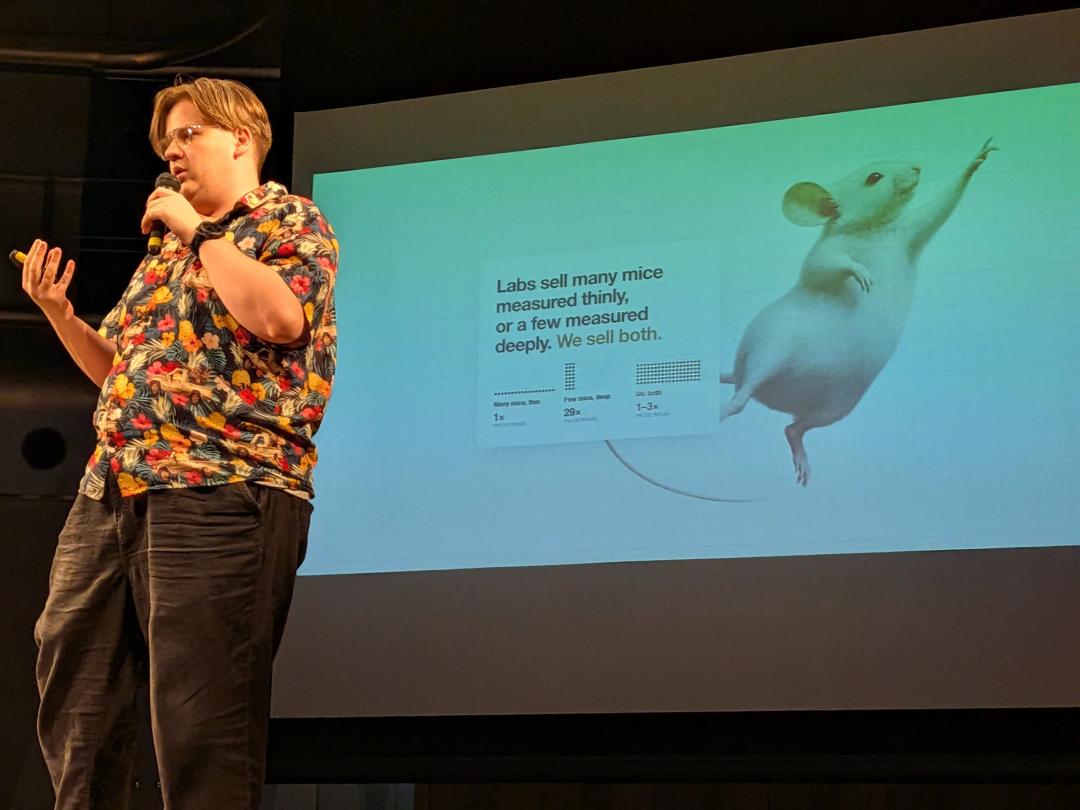
Going back to the ethics of animal testing: the real scandal is how many animals are used and killed in small studies that produce a handful of data points and barely move medicine forward. One centralised facility, where every animal yields far more data per experiment, makes that impact much easier to justify.
Why is now the right time for this? What changed in hardware, AI, or biology that makes it possible today when it wasn't five years ago?
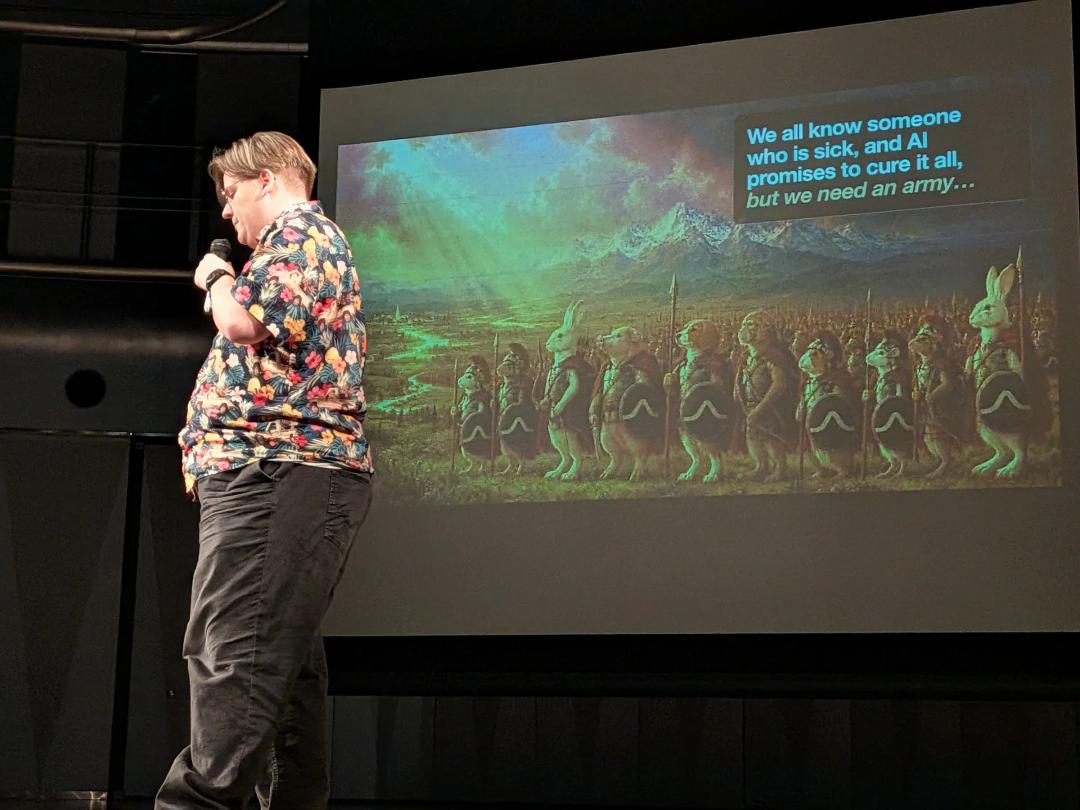
Two things changed: sensors got cheap and AI got really good. AI is producing hypotheses in biology faster than we can test them. There are now stories of people using AI tools to design treatments for their own dogs' cancer. But there's no animal testing loop as fast and cheap as the AI generating the ideas. We can try it on our dogs, but we can't get it to the people we love. That gap is the bottleneck, and it needs closing now.
What is technically new about your approach, compared with how animal studies are run today?
Two things. First, every cage carries non-invasive physical sensors that record continuously, with the aim of estimating what today takes invasive procedures to measure. Second, scale: in one facility, every animal produces far more data per experiment than in a small study run for a single readout, and the experiment can be run remotely, like cloud computing.
What's the biggest thing that's broken in how experiments get done today, and what does it cost science and patients?
We can count the people harmed by side effects in clinical trials, and that’s what the FDA and the current system do really well: counting them and preventing more harm.
We can't count the people who died, or are living with long-term illness, because a drug that could have helped them reached them years too late. That second number is almost certainly far bigger, and nobody tracks it. Every year of validation time costs lives.
What have you built so far, and what's the milestone you're most proud of?
In under three months we built our first v1 cage, signed our first pilot studies, which start in two months, and won a place in Antler Japan.
What I'm proudest of is how fast we've moved. My previous startup was nowhere near this pace. I'm still trying to learn from the best how to build and maintain speed like this.
You just got into Antler. What does that unlock, and what are the next 12 months about?
First capital, and a reason to start full-time. Specifically, it's Antler Japan, and that matters. Japan opens doors in biotech that would take years to open from anywhere else. The next 12 months are about running our first pilots and proving that the data from our cages holds up.
We brought you to Japan. What drew you here, who did you meet, and what did Japan show you that you couldn't have seen from home?
Modern stem cell science started here with Yamanaka's iPS cells, and Japan is one of very few developed countries that treats biotechnology as an opportunity rather than something to fear.
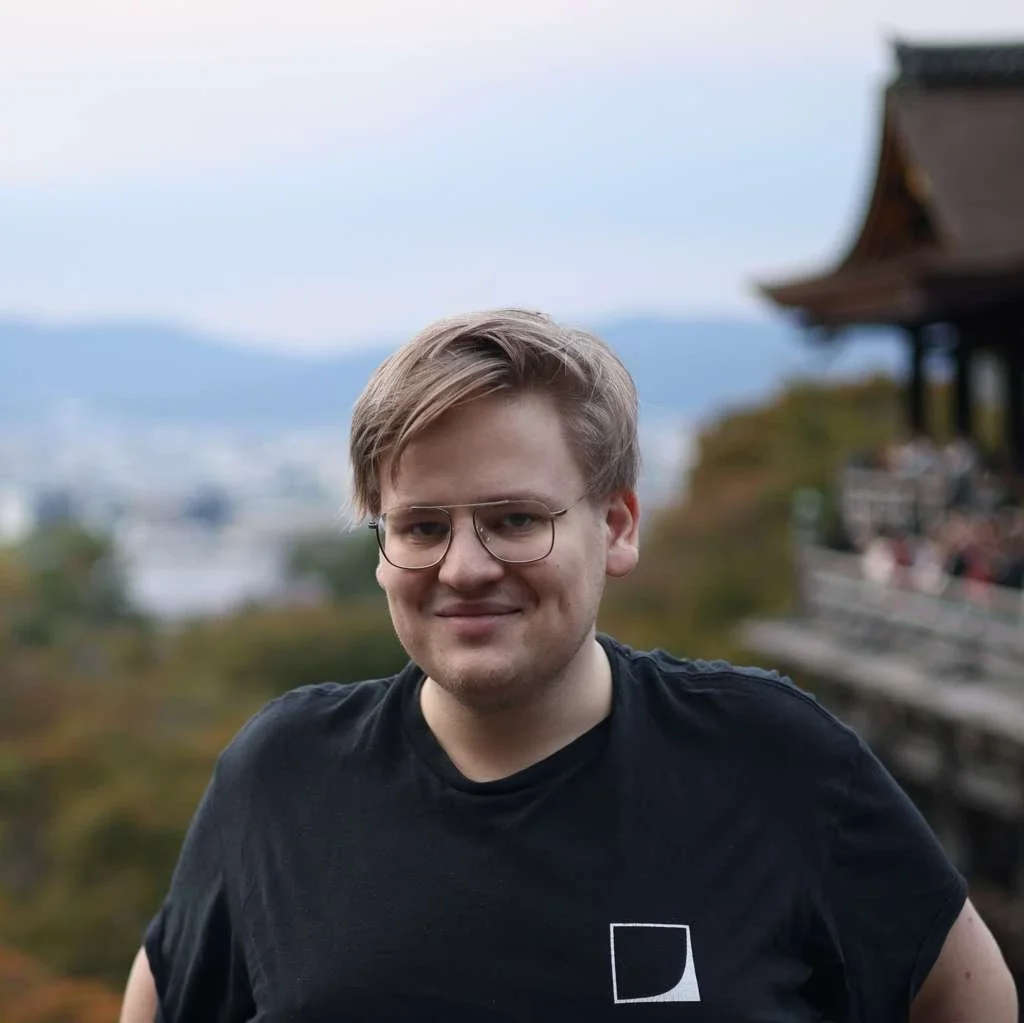
Thanks to you at Mirai Tech City, I toured Nobel laureate Yamanaka's lab and was introduced to many brilliant scientists. Thank you for organizing it. They innovate within cultural norms very different from what I'd normally call an innovative culture. It showed me that my way of doing things isn't the only way.
What's the hardest part of building this?
We're challenging long-standing assumptions in biology. Being right isn't enough; we have to prove it. One of our core bets is that non-invasive physical sensors can estimate what today takes invasive procedures to measure. Even if we prove it, getting regulators and the scientific community to accept that data as good enough will take time.
Ten years out, if Probabilistic works, how is biology different? And what should someone reading this do if they want to be part of it?
I hope our biggest impact isn't the novel tech we build inside our datacenters of biology, but that it lets the whole industry get effective drugs to people far faster. It's painful to see science-fiction biology in the lab and then go home to a world where people still get sick, suffer and die from things we already know how to fix. If you want to help close that gap, as a scientist, engineer, investor or partner facility, do not be afraid to get in touch with us: https://meet.probabilistic.bio/